Currency Conversion Mechanisms Enhancing Reward Accumulation Across Global Loyalty Platforms
Bianca Bauer · Nov 16, 2026

Currency Conversion Mechanisms Enhancing Reward Accumulation Across Global Loyalty Platforms
Observers note that currency conversion plays a central role in how users build prize balances when loyalty programs span multiple countries and platforms, and data from international payment networks shows steady growth in cross-border reward redemptions through 2026. Participants in these ecosystems often hold points earned in one currency yet seek to redeem them for goods or experiences priced in another, which creates ongoing demand for seamless exchange processes that preserve value during transfers.
Core Mechanics of Point Valuation and Exchange
Platforms calculate point values using daily foreign exchange benchmarks drawn from sources such as central bank publications, and these valuations update automatically when users move balances between affiliated programs in different regions. Researchers at academic institutions have documented that small fluctuations in major currency pairs can shift the effective purchasing power of accumulated rewards by several percentage points within a single quarter, prompting operators to introduce buffer mechanisms that lock rates for brief windows. Such features allow members to plan redemptions without immediate exposure to market swings, while the underlying systems track conversion fees separately from the point balances themselves.
Integration with Banking and Payment Rails
Modern loyalty ecosystems connect directly to banking rails that support instant currency swaps, and this linkage reduces the number of steps required when a user transfers points earned in euros to a program denominated in yen. Industry reports from organizations tracking global payments indicate that these integrations cut average processing times from several days to under an hour in many cases, which in turn encourages higher volumes of cross-platform activity. Data compiled through November 2026 reveals that programs offering embedded conversion tools record noticeably higher engagement metrics compared with those requiring external exchanges.
Regional Regulatory Influences on Conversion Practices
Authorities in various jurisdictions impose distinct rules on how loyalty points may be treated during currency exchanges, and these differences shape the technical architecture of multi-platform systems. For instance, frameworks developed by the Monetary Authority of Singapore emphasize transparent fee disclosure at every conversion stage, whereas guidelines from the Reserve Bank of Australia focus on consumer protection against unexpected value erosion. Operators therefore maintain separate compliance modules that apply the relevant rules based on the user's registered location and the currencies involved.
One study released by a European research consortium examined transaction logs from 2024 through late 2026 and found that programs incorporating automated regulatory checks experienced fewer disputes over converted balances. The same analysis highlighted that users frequently combine points from travel rewards and retail coalitions, where currency mismatches occur regularly because participating merchants operate across borders.
Technical Infrastructure Supporting Real-Time Adjustments
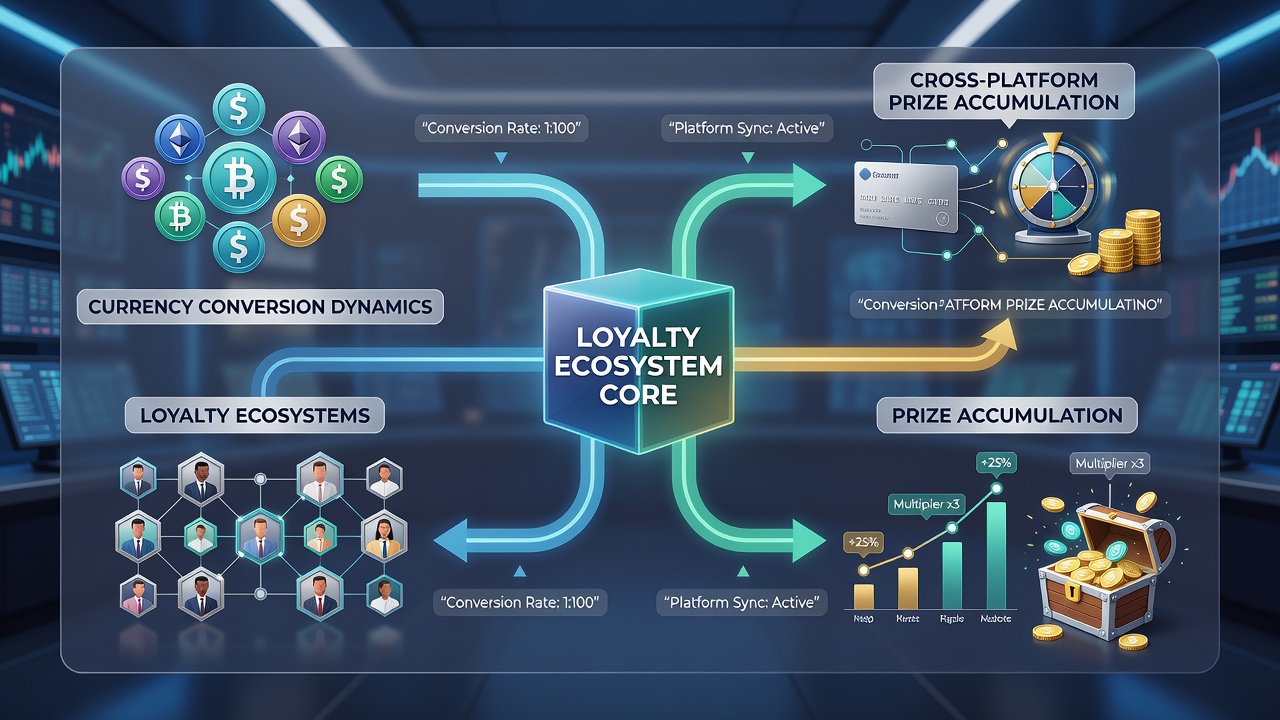
Engineers design loyalty databases with modular currency layers that recalculate totals whenever exchange rates move beyond predefined thresholds, and these layers interface with external APIs maintained by financial data providers. According to documentation from international standards bodies, the adoption of standardized message formats for point transfers has accelerated since 2025, allowing different platforms to share balance information without custom integrations for each pair of programs. This standardization reduces latency and supports the accumulation of larger prize pools when members consolidate holdings originally earned in disparate currencies.
Case examples drawn from airline alliance records demonstrate how members convert miles earned on flights in one region into hotel points usable in another, with the conversion engine applying both the prevailing rate and any promotional multipliers active at that moment. Observers tracking these flows report that promotional periods often coincide with favorable exchange conditions, which amplifies the incentive for users to move points during those windows.
Emerging Patterns in User Behavior and Platform Design
Analytics platforms that aggregate anonymized loyalty data show increased frequency of multi-currency redemptions among members who travel regularly or shop on international sites, and these patterns hold steady through the third quarter of 2026. Developers respond by embedding predictive tools that forecast the impact of expected rate changes on future prize values, giving users clearer visibility into optimal timing for transfers. The tools draw on historical volatility metrics rather than speculation, and they present scenarios in dashboard formats that users can review before confirming any exchange.
Trade associations representing loyalty technology providers have published guidelines encouraging transparent display of all conversion costs upfront, which aligns with broader consumer expectations for clarity in digital financial services. Programs following these guidelines record lower rates of abandoned transfers, according to aggregated industry metrics released in recent months.
Conclusion
Currency conversion dynamics continue to shape how prize accumulation occurs across loyalty ecosystems, with technical, regulatory, and behavioral factors interacting in measurable ways. Platforms that maintain accurate, real-time exchange capabilities while respecting regional rules position themselves to support sustained cross-platform activity. As payment infrastructure evolves and more programs adopt standardized transfer protocols, the mechanics of moving value between currencies remain central to the overall functionality of these systems.